
Temporary Car Insurance
 Kevin Harvey
Temporary car insurance solves a specific problem. You need to drive a car legally, but a full annual policy is more than the situation warrants. Driving a friend's car for a weekend. Picking up a car you have just bought and need to transport home. Using a family member's vehicle while yours is in the garage. Borrowing a van for a day to move house. These are all situations where temporary cover is a cleaner solution than the alternatives, and understanding how it works makes it easier to use it well.
What Temporary Car Insurance Is
Temporary car insurance is a short-term policy that covers you to drive a specific vehicle for a defined period. Cover typically starts from one hour and runs up to 28 days, though some providers extend this to three months or longer. The policy is separate from any existing insurance on the vehicle, which means it does not affect the vehicle owner's no-claims discount in the event of a claim.
This separation from the owner's policy is one of the main practical advantages of temporary insurance over the alternatives. Adding a named driver to someone else's annual policy can work in some circumstances, but it creates a shared liability. A claim involving the named driver affects the main policyholder's no-claims history. A standalone temporary policy eliminates that risk entirely.
Most temporary policies offer comprehensive cover, meaning they cover damage to the vehicle you are driving as well as any third-party damage or injury. Some providers offer third party only as a lower-cost option, but comprehensive is generally the more sensible choice for the additional protection it provides.
When Temporary Car Insurance Makes Sense
Temporary car insurance earns its keep in a specific set of circumstances. Understanding which situations it fits well helps you decide whether it is the right solution for you.
Borrowing someone else's car. Whether you are using a family member's vehicle while yours is off the road, driving a friend's car for a trip, or borrowing a colleague's vehicle for a specific purpose, temporary insurance protects both you and the vehicle owner cleanly. You are covered; their policy is unaffected.
Collecting a newly purchased car. If you buy a car privately and need to drive it home, you need insurance before you can legally move it. Your own annual policy may or may not extend to a newly purchased vehicle, depending on the terms. Temporary insurance provides certain cover for the journey while you sort out the longer-term policy.
Test driving before purchase. Private sellers are not obligated to provide insurance for a test drive, unlike dealerships. If you want to test drive a car you are considering buying from a private seller, temporary insurance covering the test drive period protects you legally.
Using a family member's car at home. Young people returning home from university, or family members visiting who do not have their own car, often need to drive a family vehicle for a short period. Temporary cover handles this without adding a permanent named driver to the family policy.
Van hire for a one-off move. Hired vehicles from van rental companies come with their own insurance, but the excess on the hire company's policy is often very high, and the cover may be limited. Your own temporary policy can provide more comprehensive protection for the hire period, sometimes at a lower total cost than the hire company's excess waiver.
Shared driving on a long journey. For a long road trip where multiple people will take turns driving, temporary insurance for each additional driver allows all of them to be covered without affecting the vehicle owner's main policy.
When Temporary Car Insurance Is Not the Right Answer
Temporary car insurance has clear limits, and knowing where they are prevents problems.
If you need a car regularly for a significant proportion of the year, the per-day cost of temporary cover typically exceeds what an annual policy would cost. Temporary insurance is designed for occasional use, not ongoing access. A driver who needs to borrow a family vehicle most weekends throughout the year would find an annual named driver addition more cost-effective than repeated temporary policies.
Temporary policies are also not available for every vehicle or every driver. Restrictions vary by provider but commonly include age limits (often 17 to 75, with some narrowing that further), vehicles above a certain value, vehicles modified from their standard specification, and vehicles with certain engine sizes. If the vehicle or driver falls outside the provider's accepted parameters, cover will not be available regardless of how short the required period is.
If you are looking for cover for a period longer than 28 days, temporary insurance becomes less cost-effective and other solutions, such as a short-term annual policy, a named driver addition to an existing policy, or your own annual policy, are worth comparing.
How Temporary Car Insurance Works in Practice
Buying temporary car insurance is straightforward. You typically apply online, providing your own details, the vehicle registration, and the dates you need cover. Most providers can activate cover within minutes of the application being approved.
The application process involves a check on your driving licence and a motor insurance database check to verify that the vehicle exists and is roadworthy. You will need a valid UK driving licence and the vehicle registration to hand. Some providers also check your own claims history through the Claims and Underwriting Exchange, so any recent claims may affect availability or pricing.
Once the policy is active, the insurer notifies the Motor Insurance Database, which means the vehicle shows as insured when checked. This is important for legal compliance. Driving without insurance showing on the database is an offence, even if you have a policy document in hand.
Claims work in the same way as on a standard policy. You contact the insurer, they manage the claim process, and if the claim involves the vehicle you were driving, any no-claims discount impact falls on your own temporary policy rather than the vehicle owner's annual cover. Since temporary policies do not accumulate a no-claims discount in the way annual policies do, the impact is limited to the cost of the temporary cover itself.
What Temporary Car Insurance Costs
The cost of temporary cover depends on several factors. These include the driver's age and claims history, the vehicle's value and insurance group, the length of cover, and the provider's own pricing model.
For a typical driver in their late twenties or thirties, with a clean licence and a standard vehicle, a single day of comprehensive temporary cover commonly falls in the range of £15 to £40. For younger drivers, particularly those aged 17 to 25, the per-day cost is significantly higher, reflecting the same statistical risk factors that make annual young driver insurance expensive.
Multi-day policies have lower per-day rates than single-day cover, so a week's policy is not seven times the daily rate. If you know you need cover for several consecutive days, pricing a weekly policy against consecutive daily ones is worth doing.
The comparison between temporary and annual cover becomes relevant if you are borrowing a vehicle frequently. At £20 to £30 per day, a driver who borrows a family vehicle on 20 weekends per year is spending £800 to £1,200 annually on temporary cover. An annual named driver policy on the same vehicle might cost considerably less. Running the maths for your own usage pattern before defaulting to either option is sensible.
What to Check Before You Buy
A few things are worth verifying before you commit to any temporary car insurance policy.
Licence validity. Most temporary insurance policies require a full UK driving licence. Some accept provisional licences with restrictions, and some accept non-UK licences held by visitors to the UK. Check the eligibility criteria specifically rather than assuming they are the same across providers.
Vehicle eligibility. Value limits, age of vehicle, engine size restrictions, and modifications all affect whether a vehicle qualifies. If the car is high-value, heavily modified, or an unusual type, check that it is within the provider's accepted parameters before purchasing.
Exclusions. Temporary policies typically exclude cover for commercial use, hire and reward activities, racing or track days, and in some cases off-road driving. If your intended use falls into any of these categories, a standard temporary policy will not cover you.
Excess levels. The compulsory excess on a temporary policy can be higher than on an annual policy, particularly for younger drivers. Knowing what you would be liable for in the event of a claim is part of assessing the real value of the cover.
Cancellation terms. If you buy cover for a week and then no longer need the vehicle after two days, whether you can cancel early and receive a partial refund varies by provider. Some offer no refund at all on cancelled policies; others will refund unused days minus a cancellation fee. If there is any chance your plans could change, checking this upfront saves disappointment.
You can get a car insurance quote to compare what is available for standard annual cover, which in some circumstances may be the more cost-effective solution than repeated temporary policies.
Temporary Insurance and the Motor Insurance Database
One point that sometimes causes confusion is the relationship between a temporary policy and the Motor Insurance Database (MID). The MID holds records of all insured vehicles in the UK and is the database police use to verify insurance status roadside.
Legitimate temporary insurance providers notify the MID when a policy is activated. If a police officer checks a vehicle you are driving under a temporary policy, the vehicle should show as insured. If it does not show immediately, this can be because the database update has a slight delay, particularly for very short policies purchased close to the time of driving.
Carrying proof of your temporary policy on your phone or printed is worth doing, since it provides evidence in the event of any query while the database is updated. Most providers issue policy documents immediately on purchase that you can show as proof of cover.
There is a category of product sometimes marketed as "fronting" cover or sold through unofficial channels that purports to offer short-term insurance but does not actually notify the MID or provide genuine cover. These are fraudulent products and using them constitutes driving uninsured, regardless of what the seller claims. Always purchase temporary cover from a provider that is authorised and regulated by the Financial Conduct Authority.
Alternatives to Temporary Car Insurance
Temporary insurance is one solution, but it is not always the best one for every situation. A few alternatives are worth knowing about.
Named driver addition to the vehicle owner's policy. For drivers who borrow the same vehicle regularly, being added as a named driver to the owner's annual policy can be more cost-effective than repeated temporary cover. The trade-off is that a claim involving the named driver affects the owner's no-claims history, which temporary insurance avoids.
Drive Other Cars (DOC) cover. Some annual car insurance policies include a Drive Other Cars extension that allows the policyholder to drive vehicles they do not own, typically for emergency use, under third party only cover. This is not a substitute for temporary comprehensive insurance, but it does provide legal minimum cover in some circumstances without any additional purchase. Check the wording of your own policy to understand whether and how this applies.
Short-term annual policies. Some insurers offer annual policies priced for lower mileage or occasional use, which may be more appropriate for drivers who need flexible access to a vehicle over a longer period without the commitment of full annual cover.
Frequently asked questions
Does temporary car insurance affect my no-claims discount?
A claim made under a temporary car insurance policy does not affect the vehicle owner's no-claims discount, since it is a separate policy. It may affect your ability to get competitive temporary cover in the future, since providers check claims history. If you have your own annual policy, a claim on a temporary policy typically does not affect that no-claims bonus either, since the two policies are separate. It is worth checking this with both your annual insurer and the temporary provider if you want certainty on your specific situation.
Can I get temporary car insurance if I am under 21?
Yes, most temporary car insurance providers accept drivers from age 17 upwards, though the minimum age for some vehicles or providers may be higher. Younger drivers pay significantly more per day than older drivers, reflecting the higher risk that statistical claims data shows for this age group. The vehicle's value and insurance group also affect whether cover is available and at what price for younger drivers.
Can I drive any car with temporary car insurance?
No. Each temporary insurance policy covers a specific vehicle, identified by its registration number. You cannot use one temporary policy to drive multiple vehicles or switch between vehicles during the policy period. If you need to drive more than one vehicle, you would need separate policies for each. The vehicle also needs to meet the provider's eligibility criteria in terms of value, age, and type.
How quickly does temporary car insurance take effect?
Most temporary insurance is activated within minutes of purchase and takes effect immediately or from a time you specify. The cover can typically start within the hour for policies purchased online. The Motor Insurance Database is usually updated the same day, though there can be a short delay for very recently activated policies. Keeping your policy document accessible provides proof of cover while any database update processes.
Is temporary car insurance more expensive than annual cover?
On a per-day basis, temporary cover is significantly more expensive than an equivalent daily rate on an annual policy. This is expected. Insurers building annual pricing models have certainty about a year's exposure, while temporary providers face the uncertainty of very short cover periods with limited history to assess. For genuinely short-term needs, the higher daily rate is often worth paying for the flexibility and the protection of the vehicle owner's no-claims record. For regular or frequent use, an annual policy becomes more cost-effective relatively quickly.
HowMuch Holdings Ltd. is an Introducer Appointed Representative of Seopa Ltd, FCA FRN 313860. Insurance comparison services are provided by Seopa Ltd.
This article is for informational purposes only and does not constitute financial advice. Always seek independent advice before making financial decisions.
Related articles

Temporary Van Insurance Explained
Temporary van insurance gives you cover for a van you do not own, or for a short period when you do not need a full annual policy. This guide explains how it works, when it makes sense, and what to check before you buy.
Classic Car Insurance
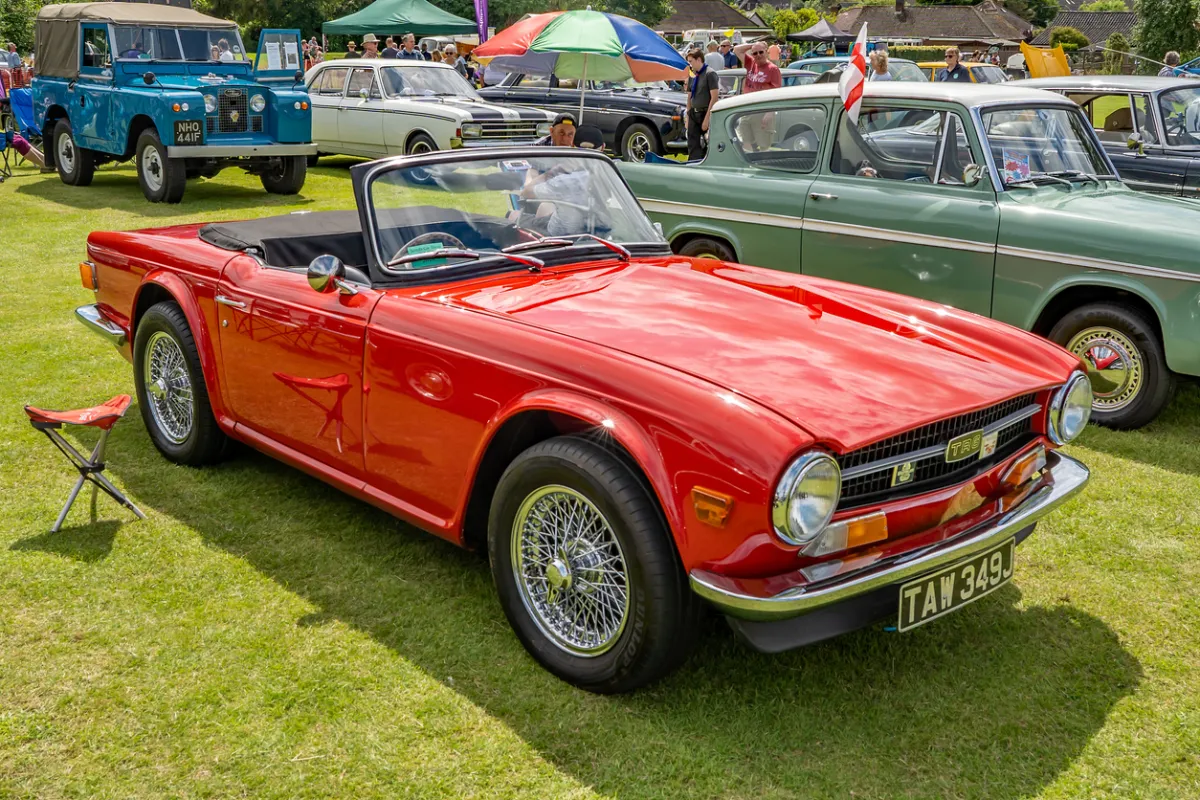
Standard car insurance pays out market value after a total loss, and for a classic car that has held or increased its value over decades, that figure is often less than the car is actually worth. This guide explains how specialist classic car insurance works and why agreed value cover matters.

Young Driver Insurance
Young drivers pay more for car insurance than any other age group. That is a statistical reality rather than an arbitrary decision, but it does not mean you are stuck with whatever quote comes back first. This guide explains what drives the cost and what genuinely makes a difference.